Understanding Image Contraction
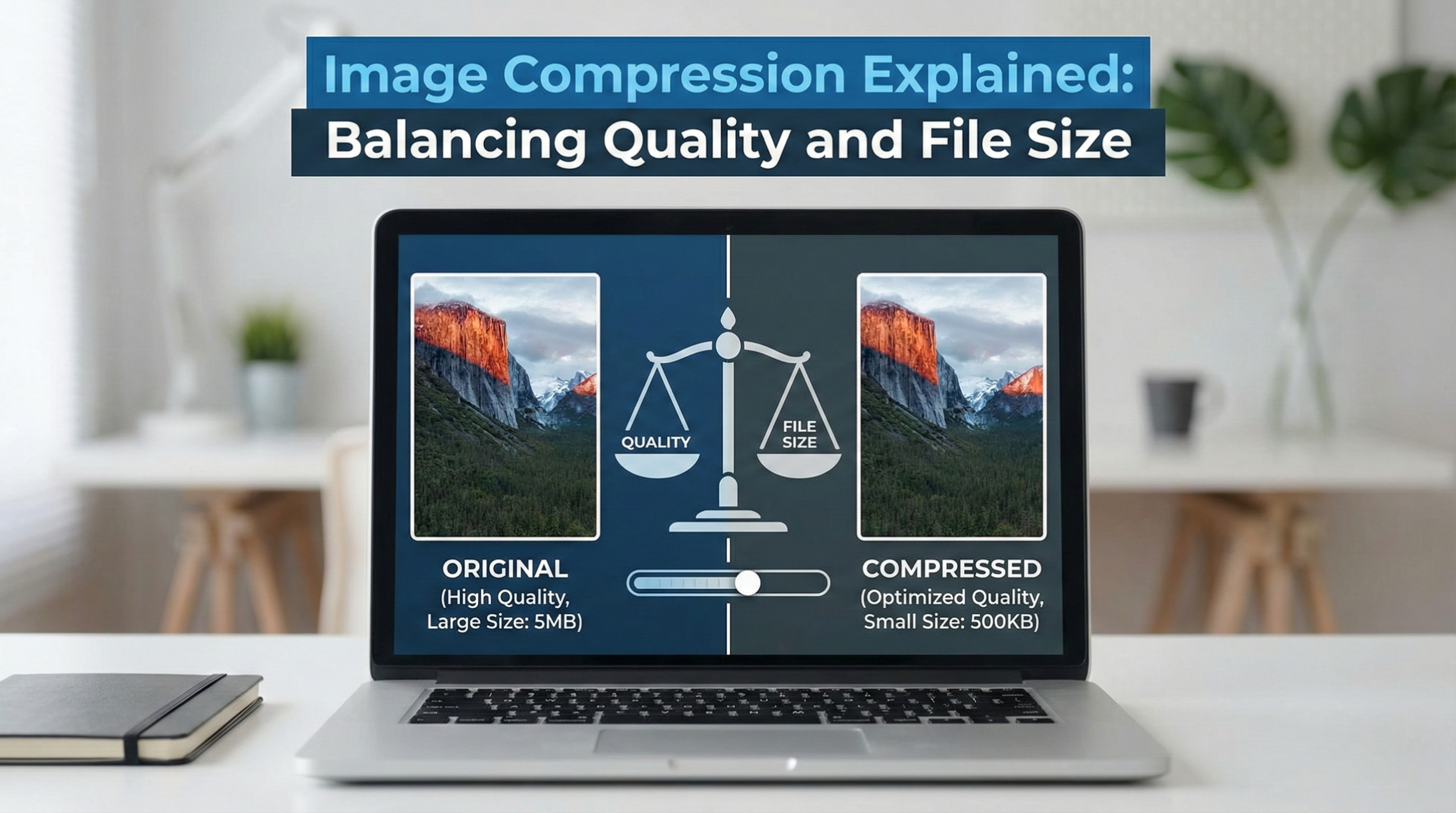
Image contraction reduces train size by removing spare or gratuitous data. The challenge lies in maintaining visual quality while achieving meaningful size reductions. Understanding contraction types and settings is essential for optimal results.
Lossy vs Lossless Compression
Lossless Compression
Preserves every pixel of original data:
How It Works
- Pattern identification: Finds repeating data
- Garbling effectiveness: Represents patterns with shorter canons
- Perfect reconstruction: Original impeccably recoverable
- No quality loss: Identical to original
Lossless Formats
- PNG: Bravery for plates and screenshots
- GIF: Limited colors (256), supports vitality
- WebP lossless: Better contraction than PNG
- TIFF: Professional/archival use
Benefits
- Perfect quality retention
- Edit without declination
- Ideal for ensigns and textbook
- Master train storehouse
Downsides
- Larger train sizes than lossy
- Limited contraction rate
- Not ideal for photos
Lossy Compression
Discards less important data to achieve lower sizes:
How It Works
- Perceptual coding: Removes data humans slightly notice
- Frequence analysis: Focuses on important visual information
- Quantization: Simplifies color and detail data
- Unrecoverable: Can not completely restore original
Lossy Formats
- JPEG: Standard for photos
- WebP lossy: More than JPEG
- AVIF: Next-generation effectiveness
- HEIC: Apple bias dereliction
Benefits
- Dramatic train size reduction
- 50-90 lower than lossless
- Excellent for prints
- Faster lading times
Downsides
- Quality declination
- Compression vestiges visible
- Quality loss composites with re-saves
- Not suitable for editing workflow
JPEG Compression Deep Dive
How JPEG Compression Works
The Process
- Color space conversion: RGB to YCbCr (separates brilliance from color)
- Chroma subsampling: Reduces color resolution (humans less sensitive)
- Block division: 8×8 pixel blocks
- DCT metamorphosis: Converts to frequence sphere
- Quantization: Rounds less important frequentness
- Entropy garbling: Effective double encoding
Quality Settings
Quality Scale (0-100)
- 0-50 (Low): Heavy contraction, visible vestiges
- 60-75 (Medium): Conspicuous quality loss, respectable for thumbnails
- 80-85 (High): Good balance, minimum vestiges
- 90-95 (Veritably High): Excellent quality, larger lines
- 96-100 (Maximum): Minimum contraction, veritably large lines
Recommended Settings
- Thumbnails: 60-70
- Web content: 80-85
- Product prints: 85-90
- High-quality galleries: 90-95
- Publish medication: 95-100
Chroma Subsampling
Reduces color information without affecting brilliance:
Common Modes
- 4:4:4: No subsampling (largest lines)
- 4:2:2: Half vertical color resolution
- 4:2:0: Half vertical and perpendicular (most common)
When to Use Each
- 4:4:4: Text on multicolored backgrounds
- 4:2:2: Professional photography
- 4:2:0: General web images (stylish contraction)
Progressive vs Birth
Birth JPEG
- Loads top to nethermost
- Simpler garbling
- Slightly lower lines
- Faster encoding/decoding
Progressive JPEG
- Loads in adding quality passes
- More perceived lading speed
- Slightly larger lines (occasionally)
- More for large images
PNG Compression
How PNG Compression Works
PNG uses lossless DEFLATE algorithm:
Process
- Filtering: Pre-process pixels to ameliorate contraction
- DEFLATE: LZ77 Huffman rendering
- Chunking: Organize data in gobbets
PNG Optimization
Compression Situations (0-9)
- 0: No contraction (largest, fastest)
- 1-3: Fast contraction
- 6: Dereliction balance
- 9: Maximum contraction (lowest, slowest)
Color Depth Reduction
- 24-bit (16.7M colors): Full color photos
- 8-bit (256 colors): Ensigns, icons (much lower)
- Listed color: Custom palette for specific image
Optimization Tools
- pngquant: Lossy color reduction
- optipng: Lossless optimization
- pngcrush: Multiple optimization attempts
- ImageOptim: Combines multiple tools
PNG-8 vs PNG-24
PNG-8
- 256 colors maximum
- Important lower train sizes
- Double translucency (on/off)
- Good for simple plates
PNG-24
- Million colors
- Larger train sizes
- Nascence translucency (256 situations)
- Needed for photos
WebP Compression
WebP Advantages
Combines benefits of both JPEG and PNG:
- Lossy mode: 25-35 lower than JPEG
- Lossless mode: 26 lower than PNG
- Translucency: Lower than PNG with nascence
- Vitality: More than GIF
Quality Settings
Lossy WebP
- 60-70: Thumbnails, exercise images
- 75-80: Standard web images
- 85-90: High-quality content
- 95+: Near-lossless quality
Lossless WebP
- Use for ensigns and plates
- Lower than PNG
- Supports translucency
AVIF Compression
Next-Generation Efficiency
AVIF offers superior contraction:
Advantages
- 50 lower than JPEG at same quality
- 20-30 lower than WebP
- Wide color diapason: HDR support
- High bit depth: 10-bit, 12-bit color
Quality Recommendations
- 60-70: Thumbnails
- 75-80: Standard web use
- 85-90: High-quality images
- 95+: Near-perfect quality
Speed vs Quality
AVIF encoding has speed/quality dicker:
- Speed 6: Fast encoding, good contraction
- Speed 4: Balanced (recommended for utmost)
- Speed 0: Slowest, stylish contraction
Compression Artifacts
Common Artifacts
Blockiness (JPEG)
- Beget: Low quality setting, 8×8 blocks visible
- Result: Increase quality, use advanced resolution source
- Prevention: Quality 80 for prints
Banding
- Beget: Inadequate color depth in slants
- Result: Advanced quality, add noise
- Prevention: Avoid heavy contraction on slants
Mosquito Noise
- Beget: JPEG contraction around sharp edges
- Result: Increase quality, use PNG for sharp edges
- Prevention: PNG for plates with textbook
Color Shift
- Beget: Chroma subsampling, low quality
- Result: Advanced quality, 4:4:4 subsampling
- Prevention: Quality 85 for critical color delicacy
Posterization
- Beget: Too many colors, heavy contraction
- Result: Advanced quality, more color depth
- Prevention: Avoid extreme contraction
Artifact Minimization
- Launch with high quality source: Do not compress formerly-compressed images
- Use applicable quality settings: Test to find optimal balance
- Choose right format: JPEG for prints, PNG for plates
- Avoid multiple saves: Quality degrades each time
- Keep originals: Always maintain uncompressed master
Train Size vs Quality Trade-offs
Real-World Exemplifications
1920×1080 Snap
- PNG lossless: 3.5 MB (perfect quality)
- JPEG 95: 1.2 MB (excellent quality)
- JPEG 85: 600 KB (veritably good quality)
- JPEG 75: 350 KB (good quality, minor vestiges)
- WebP 85: 400 KB (veritably good quality)
- AVIF 85: 280 KB (veritably good quality)
Totem (500×500)
- SVG: 3 KB (perfect at any size)
- PNG-8: 15 KB (perfect quality, limited colors)
- PNG-24: 45 KB (perfect quality, full color)
- JPEG 90: 35 KB (vestiges on edges)
- WebP lossless: 25 KB (perfect quality)
Chancing the Sweet Spot
The 80/20 Rule
Quality 80-85 provides:
- 80 of maximum quality
- Only 20 of maximum train size
- Inappreciable differences for utmost observers
- Optimal balance for web delivery
Testing Process
- Launch high: Begin at quality 90
- Reduce gradationally: Lower in 5 supplements
- Compare visually: View at factual display size
- Check train size: Note size at each quality position
- Find threshold: Stop when vestiges come conspicuous
- Go one step back: Use former quality setting
Use Case Recommendations
E-Commerce Product Prints
- Format: JPEG or WebP
- Quality: 85-90
- Rationale: Balance quality and cargo speed
- Confines: 1200-1600px wide
Blog Post Images
- Format: WebP with JPEG fallback
- Quality: 80-85
- Explanation: Faster runner loads, good quality
- Confines: 800-1200px wide
Idol Images Banners
- Format: AVIF/WebP/JPEG Progressive
- Quality: 85-90
- Rationale: High impact, worth larger size
- Optimization: Lazy lading, progressive
Thumbnails
- Format: JPEG or WebP
- Quality: 70-75
- Explanation: Small display size hides vestiges
- Confines: 200-400px wide
Ensigns and Icons
- Format: SVG (vector) or PNG-8
- Quality: Lossless only
- Rationale: Sharp edges, translucency, small lines
- Indispensable: WebP lossless for complex ensigns
Screenshots
- Format: PNG or WebP lossless
- Quality: Lossless
- Rationale: Text clarity essential
- Optimization: Reduce color depth if possible
Batch Optimization Workflow
Processing Multiple Images
Steps
- Organize by type: Group analogous images
- Set norms: Define quality/size for each group
- Test samples: Optimize representative images
- Batch process: Apply settings to entire group
- Quality check: Spot-check arbitrary samples
- Provisory originals: Keep uncompressed masters
Robotization Tools
- ImageMagick: Command-line batch processing
- Squoosh: Web-grounded comparison tool
- Sharp: Node.js image processing
- Photoshop conduct: Automate repetitious tasks
Mobile Considerations
Mobile-Specific Optimization
- Lower defenses: Can use lower resolution
- Slower connections: Prioritize train size
- Limited data plans: Compression more critical
- Battery impact: Lower lines = lower power
Responsive Images
Serve meetly sized images:
<picture>
  <source media="(max-width: 600px)" srcset="small.jpg">
  <source media="(max-width: 1200px)" srcset="medium.jpg">
  <img src="large.jpg" alt="Description">
</picture>
Monitoring and Testing
Quality Metrics
Automated Metrics
- SSIM: Structural Similarity Index
- PSNR: Peak Signal-to-Noise rate
- Butteraugli: Perceptual difference
Homemade Testing
- View at factual display size
- Test on target bias
- Check under different lighting
- Compare to original side-by-side
Performance Impact
Measure real-world enhancement:
- Runner cargo time: Before/after comparison
- Largest Contentful Paint: Core Web Vital
- Total runner weight: Overall size reduction
- Bandwidth savings: Multiply by business
Future Compression Technologies
Arising Formats
- JPEG XL: Next-gen JPEG relief
- AVIF advancements: More garbling speed
- AI-grounded contraction: Machine literacy optimization
Advanced Ways
- Content-apprehensive contraction: Different quality for different regions
- Perceptual optimization: Focus on visually important areas
- Neural contraction: AI-powered garbling
Conclusion
Learning image contraction requires understanding the specialized fundamentals while balancing practical enterprises of quality, train size, and use case conditions. The optimal contraction strategy varies by content type, viewing environment, and performance conditions. By choosing applicable formats, configuring quality settings intelligently, and testing results completely, you can achieve dramatic train size reductions while maintaining excellent visual quality. Flash back contraction is n't one-size-fits-each — invest time in chancing the sweet spot for your specific images, and always keep uncompressed originals for unborn use. The lucre in bettered performance, reduced bandwidth costs, and better stoner experience makes proper image contraction one of the most precious optimizations you can apply.