If you've ever tried participating an iPhone print and encountered comity issues, you've likely met HEIC. This ultramodern format offers remarkable advantages but requires understanding to work with effectively.
What's HEIC Format?
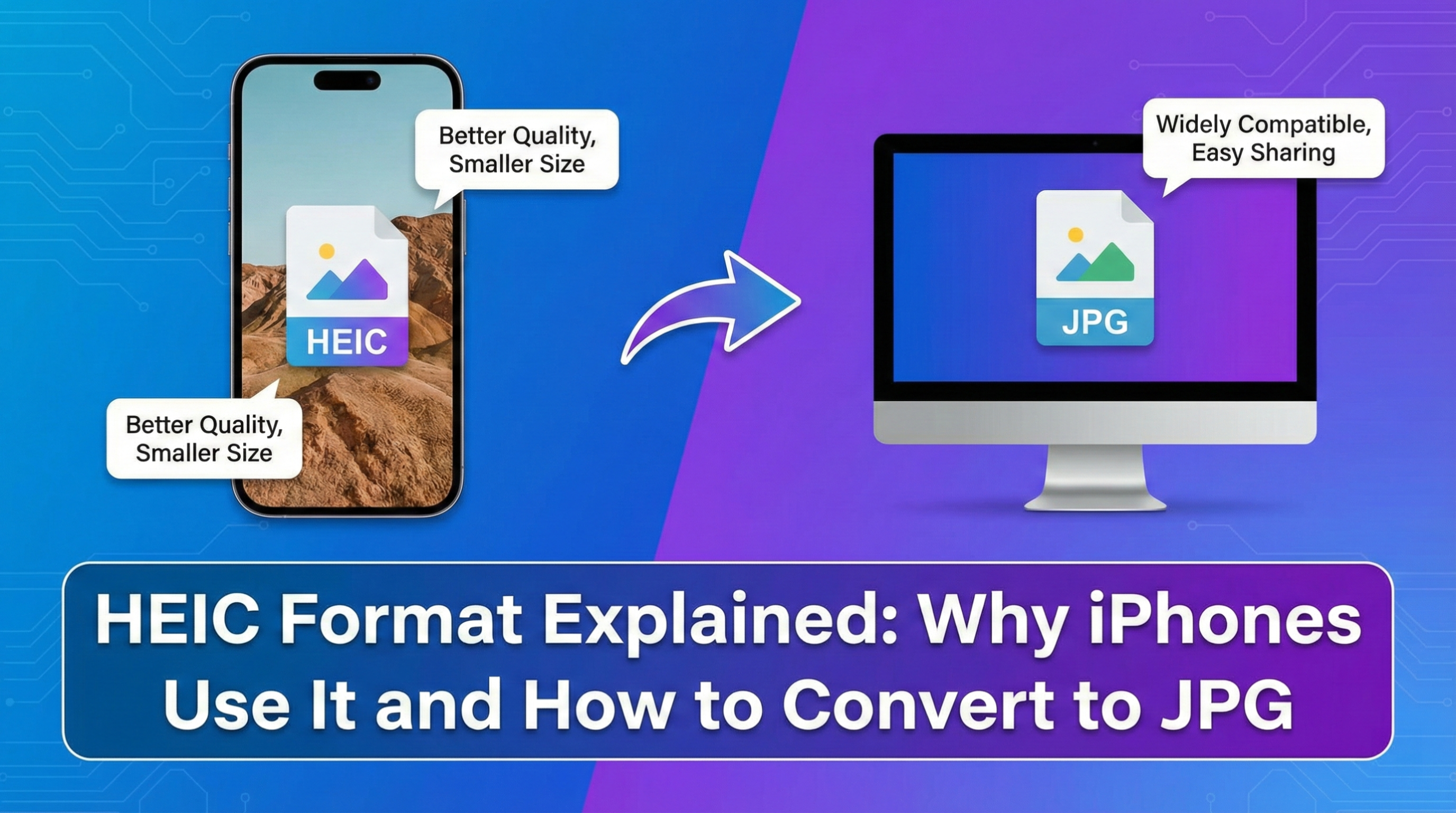
HEIC (High Efficiency Image Container) is the dereliction image format for prints taken on iPhones and iPads since iOS 11. This format offers significant advantages over traditional JPEG, but comes with comity challenges that affect millions of druggies daily.
Introduced in 2017, HEIC marked Apple's move toward more effective image storehouse and operation. The format is part of the HEIF (High Efficiency Image Format) standard developed by the Moving Picture Experts Group.
Why Apple Chose HEIC
Apple's decision to espouser HEIC was n't arbitrary. The company espoused HEIC in 2017 for compelling specialized reasons that directly profit druggies:
Superior Compression
HEIC lines are roughly 50% lower than original JPEG images while maintaining the same visual quality — an emotional achievement in image contraction technology.
This dramatic size reduction means:
- Further prints stored on your device
- Faster iCloud Photo Library syncing
- Reduced data operation when participating prints
- Quicker backup times
Advanced Features
Beyond contraction, HEIC supports ultramodern photography features that JPEG simply can not handle. These capabilities enable the advanced features iPhone druggies enjoy:
- 16-bit color depth: Richer colors and better slants
- Translucency support: Nascence channel like PNG
- Multiple images: Store image sequences in one train
- Editing data: Non-destructive edits stored in the train
- Live prints: Videotape and still image in one vessel
The Comity Challenge
While HEIC offers emotional specialized advantages, it faces significant relinquishment challenges outside the Apple ecosystem. This creates practical difficulties for druggies who work across multiple platforms.
Limited Software Support
The reality is that numerous operations still struggle with HEIC:
- Numerous Windows operations can not open HEIC lines natively
- Web cybersurfers have inconsistent HEIC support
- Aged image editing software does not fete the format
- Social media platforms may not accept HEIC uploads
Platform Reliance
HEIC works seamlessly within the Apple ecosystem but faces disunion away. This creates a divided stoner experience:
- Android bias have limited HEIC support
- Windows 10/11 requires codec installation for HEIC viewing
- Linux druggies need specific libraries installed
When to Convert HEIC to JPG
Understanding when transformation is necessary helps you work more efficiently. Convert your HEIC images to JPG when:
- Participating across platforms: Transferring prints to non-Apple druggies
- Web uploads: Advertisement to websites or social media
- Professional use: Printing services or customer deliveries
- Archival purposes: Long-term storehouse with universal comity
- Dispatch attachments: Icing donors can view images
HEIC to JPG Conversion Systems
Several effective styles are available for converting HEIC to JPG, each suited to different situations. Then are the most practical approaches:
System 1: iPhone Settings (Automatic)
The simplest approach: Configure your iPhone to automatically convert HEIC to JPG when participating. This one-time setup eliminates unborn conversion hassles.
Configuration way:
- Open Settings app
- Scroll to Prints
- Under "Transfer to Mac or PC"
- Elect "Automatic" rather of "Keep Originals"
Your iPhone will now automatically convert HEIC to JPG when participating or transferring prints to non-Apple bias.
System 2: Online Conversion Tools
For quick transformations, online tools offer convenience without installing software. These web- grounded results are ideal for occasional transformations:
- No software installation needed
- Workshop on any device with a cybersurfer
- Batch conversion support
- Instant results
System 3: Desktop Applications
For regular transformations, desktop software provides:
- Faster processing
- Offline capability
- Batch processing
- Sequestration (files stay on your device)
HEIC vs JPG Technical Comparison
Train Size
For a 12MP iPhone print:
- HEIC: 1.5-2 MB typical size
- JPG (high quality): 3-4 MB typical size
- Savings: 50-60% lower lines with HEIC
Quality
At original train sizes, HEIC provides:
- Better detail preservation
- Reduced contraction vestiges
- Advanced color delicacy
- Smoother slants
Comity
- HEIC: Limited to ultramodern Apple bias and streamlined software
- JPG: Universal support across all bias and platforms
Conversion Quality Tips
To maintain maximum quality when converting HEIC to JPG:
- Use quality settings 90-95: Balances size and quality
- Avoid multiple transformations: Each JPG save reduces quality
- Keep HEIC originals: Store masters in HEIC format
- Convert only when demanded: Do not convert your entire library
Storehouse Considerations
The space savings with HEIC are substantial:
| 1000 HEIC prints | 1.8 GB |
| 1000 JPG prints | 3.5 GB |
| Savings | 1.7 GB (nearly 50%) |
Future of HEIC
The format continues to evolve:
- Adding cybersurfer support in 2026
- Further software adding native HEIC support
- Android manufacturers considering relinquishment
- Advanced contraction in newer iOS performances
Stylish Practices
- Keep originals in HEIC on your iPhone for space savings
- Convert to JPG when participating outside Apple ecosystem
- Use automatic conversion in iPhone settings for flawless sharing
- Store libraries in JPG for long-term comity
- Educate donors about HEIC if participating original format
Conclusion
HEIC represents a significant technological advancement in image contraction, offering better quality at lower train sizes. Still, until universal support arrives, converting HEIC to JPG remains necessary for participating and comity. Understanding when to use each format ensures you leverage HEIC's advantages while maintaining availability across all platforms.