The 200ms Challenge
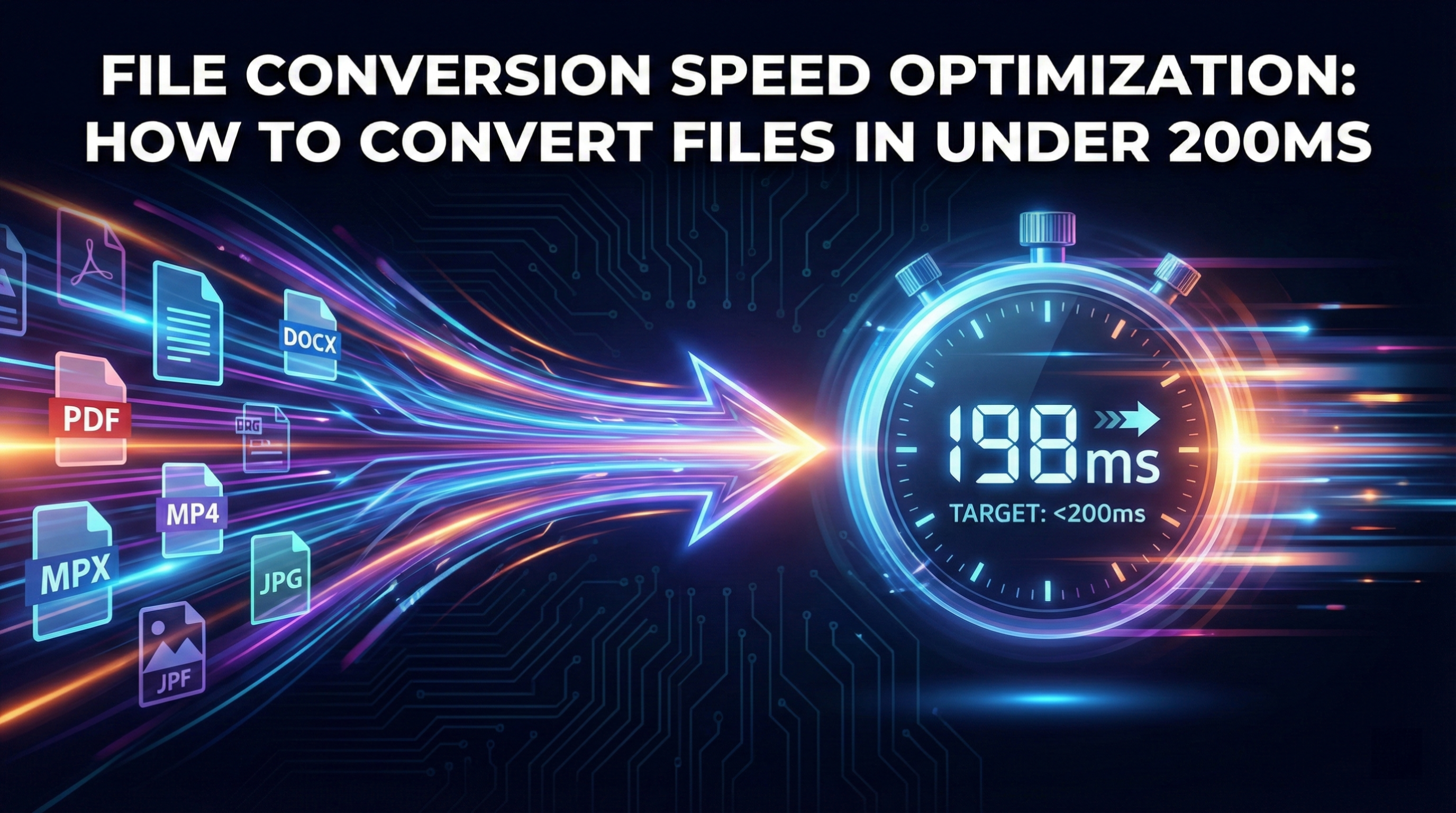
Druggies anticipate instant results. Exploration shows that detainments beyond 200 milliseconds feel noticeably slow, reducing stoner satisfaction and conversion rates. Achievingsub-200ms train conversion requires architectural imagination and specialized optimization.
Why Customer-Side Processing Wins
Traditional garçon-grounded conversion introduces necessary quiescence:
Garçon-Side Backups
- Network upload: 50-500ms depending on train size and connection
- Garçon line time: 10-1000ms during high business
- Processing time: 100-2000ms depending on garçon cargo
- Network download: 50-500ms for result
- Total: 210-3000ms typical range
Customer-Side Advantages
- Zero network quiescence: No upload/download time
- Instant launch: No garçon line
- Devoted coffers: Full CPU available
- Sequestration: Lines never leave device
- Scalability: No garçon costs per conversion
Cybersurfer API Optimization
Oil API for Image Transformations
The HTML5 Canvas API provides tackle-accelerated image processing:
Optimization Ways:
- Offscreen Canvas: Process in background thread
- ImageBitmap: Faster than Image element lading
- GPU acceleration: Influence plates tackle
- Minimum redraws: Single oil operation
Performance Earnings:
- PNG to JPG: 50-150ms for typical images
- Resize convert: 80-200ms
- Format change only: 30-100ms
Train Anthology API
Effective train reading strategies:
- ArrayBuffer: Fastest for double data
- Streaming: Process large lines in gobbets
- Blob slicing: Read only demanded portions
Worker Vestments
Offload processing to help UI blocking:
- Web Workers: CPU-ferocious transformations
- Shared Array Buffer: Zero-dupe data transfer
- Resemblant processing: Multiple workers for batch transformations
WebAssembly Acceleration
When to Use WebAssembly
WASM provides near-native performance for computationally ferocious tasks:
- Image codec libraries: JPEG, PNG, WebP encoders
- Videotape processing: FFmpeg collected to WASM
- PDF rendering: Complex document operations
- Compression algorithms: ZIP, GZIP, Brotli
Performance Advancements
- 2-10× briskly: Compared to JavaScript
- Predictable timing: Harmonious performance
- Memory effective: Direct memory access
Perpetration Considerations
- Original cargo: WASM modules add to rush size
- Lazy lading: Cargo WASM only when demanded
- Hiding: Cybersurfer caches collected WASM
Format-Specific Optimizations
Image Transformations
Strategies for common image operations:
JPEG Encoding
- Quality presets: Pre-configured quality situations
- Subsampling: 4:2:0 for prints
- Huffman tables: Optimized contraction tables
- Progressive encoding: Skip for speed (use birth)
PNG Optimization
- Compression position: Balance speed vs size
- Sludge selection: Bus-elect for speed
- Interlacing: Disable for faster garbling
WebP Encoding
- Preset: Use "dereliction" or "print" preset
- Method: Lower system number = briskly
- Quality: 75-85 sweet spot for speed/quality
PDF Operations
PDF Generation
- Image contraction: Pre-compress images
- Fountain subsetting: Include only used characters
- No gratuitous metadata: Strip redundant parcels
PDF to Image
- Resolution selection: Lower DPI for speed
- Single runner birth: Convert specific runners only
- Render to oil: Direct cybersurfer rendering
Memory Operation
Precluding Memory Bloat
Large lines can beget memory issues:
- Drop object URLs: Free memory incontinently after use
- Oil clearing: Clear oil environment after rendering
- Garbage collection hints: Null large objects
- Streaming processing: Process train gobbets incrementally
Large Train Strategies
- Knob processing: Process 10-50 MB gobbets
- Progress reporting: Update UI during processing
- Worker pools: Exercise workers rather of recreating
Hiding Strategies
Cybersurfer Cache Optimization
- Stationary means: Aggressive caching for libraries
- Service Workers: Cache conversion libraries
- IndexedDB: Store constantly used means
Result Hiding
For repeated transformations:
- Hash-grounded lookup: Check if train formerly converted
- Memory cache: Keep recent results in RAM
- Expiration: Clear cache after time period
Network Optimization
Lazy Loading
Cargo coffers only when demanded:
- Law splitting: Separate conversion libraries
- Dynamic significances: Cargo on first use
- Format-specific modules: Only cargo needed codecs
CDN Application
- Edge locales: Serve means from nearest garçon
- HTTP/2: Multiplexed connections
- Brotli contraction: Lower transfer sizes
UI/UX Optimization
Perceived Performance
Make transformations feel instant:
- Auspicious UI: Show affect incontinently
- Progress suggestion: Skeleton defenses, baits
- Instant feedback: Respond within 50ms
- Background processing: Do not block UI
Loading States
- Train selection: Instant visual feedback
- During processing: Progress bar or incentive
- Completion: Smooth transition to result
Performance Monitoring
Key Metrics
Measure what matters:
- Time to First Byte: Original train reading
- Processing time: Factual conversion duration
- Total time: Stoner-perceived quiescence
- Success rate: Conversion completion chance
Performance Budgets
- Little images (<1MB): <100 ms target
- Medium images (1-5MB): <200 ms target
- Big images (5-10MB): Target less than 500 ms
- PDF operations: Less than 300 milliseconds per page
Implementing Analytics
- Monitor the amount of time it takes to convert between formats
- Keep an eye on how file size affects speed
- Find procedures that are slow
- Modifications to A/B testing optimization
Browser Support
Feature Identification
Verify compatibility across browsers:
- Check the availability of the toBlob() function: For canvas support
- WebP support: Check the test canvas.toDataURL('image/webp')
- AVIF Support: Feature Detection Needed
- Support for workers: Return to the main thread
Polyfills
- Polyfill to Blob: For older browsers
- Polyfill promise: IE11 compatibility
- Fetch polyfill: Outdated browsers
Patterns in Architecture
Quick Route / Slow Route
Make the most of typical scenarios:
- Quick route: Using native browser APIs for typical transformations
- Slow route: Complex processing or WASM for edge cases
- Detection: Automatically navigate to the correct route
Advanced Improvement
- Fundamental functions: Operates everywhere
- Improved features: Quicker on contemporary browsers
- Graceful degradation: Fallbacks for unsupported features
Actual Performance
Typical Conversion Times
Measured using current technology (2024-2026 hardware):
Image Conversions (1920×1080):
- PNG to JPG: 60-120 ms
- WebP to JPG: 80-150 ms
- PNG to AVIF: 150-300 ms
- HEIC to JPG: 200-400 ms
Activities Involving PDF Files:
- JPG to PDF (single page): 100-200 milliseconds
- PDF to JPG (first page): 150-300 ms
- Multi-page PDF creation: 100-200 milliseconds per page
Conversions of Documents:
- Markdown to HTML: 10-50 ms
- CSV to JSON: 20-100ms depending on size
- JSON format: 5-30 ms
Differences in Device Performance
Different devices have different performance:
- High-end desktop: Baseline performance
- Mid-range laptop: 1.5-2 times slower
- Today's smartphone: 2-3 times slower
- Older gadgets: 3-5 times slower
List of Optimizations
- When feasible, use client-side processing
- Utilize the Canvas API to convert images
- Use Web Workers for CPU-intensive operations
- For code that is essential to performance, consider WebAssembly
- Libraries for converting lazy loads
- Aggressively cache outcomes and fixed assets
- Improve memory management and waste collection
- Offer immediate UI response for observed performance
- Keep track of and quantify how well users are actually performing
- Create fallbacks for browser compatibility
Typical Mistakes in Performance
- Block main thread: Freeze user interface during simultaneous operations
- Memory leaks: Not clearing up BlobURLs and canvas contexts
- Excessive optimization: Complex code that offers little benefit
- No fallbacks: Breaks on earlier browsers
- Massive packages: Slow initial page load
- Server dependencies: Introducing needless latency
Future Tech
New technology for even faster conversions:
- WebGPU: Direct GPU computing access
- SIMD commands: Used for processing data in parallel
- File System Access API: Stream processing big files
- Compression Streams API: Inherent browser compression
In Conclusion
A combination of architectural choices, algorithm optimization, and rigorous implementation is necessary to achieve file conversions under 200 milliseconds. The computational capacity necessary for immediate outcomes is provided by WebAssembly and contemporary browser APIs, while client-side processing removes network latency. You can provide the lightning-fast experience that users expect by using these optimization strategies and consistently monitoring performance. Keep in mind that the quickest conversion is one that feels instantaneous and combines actual speed with intelligent UX design to provide a smooth user experience.